Before my first track day, I decided to swap the stock brake pads for EBC YellowStuffs. They were the cheapest performance upgrade available and I wanted to see how far they'd take me — both in performance and longevity.
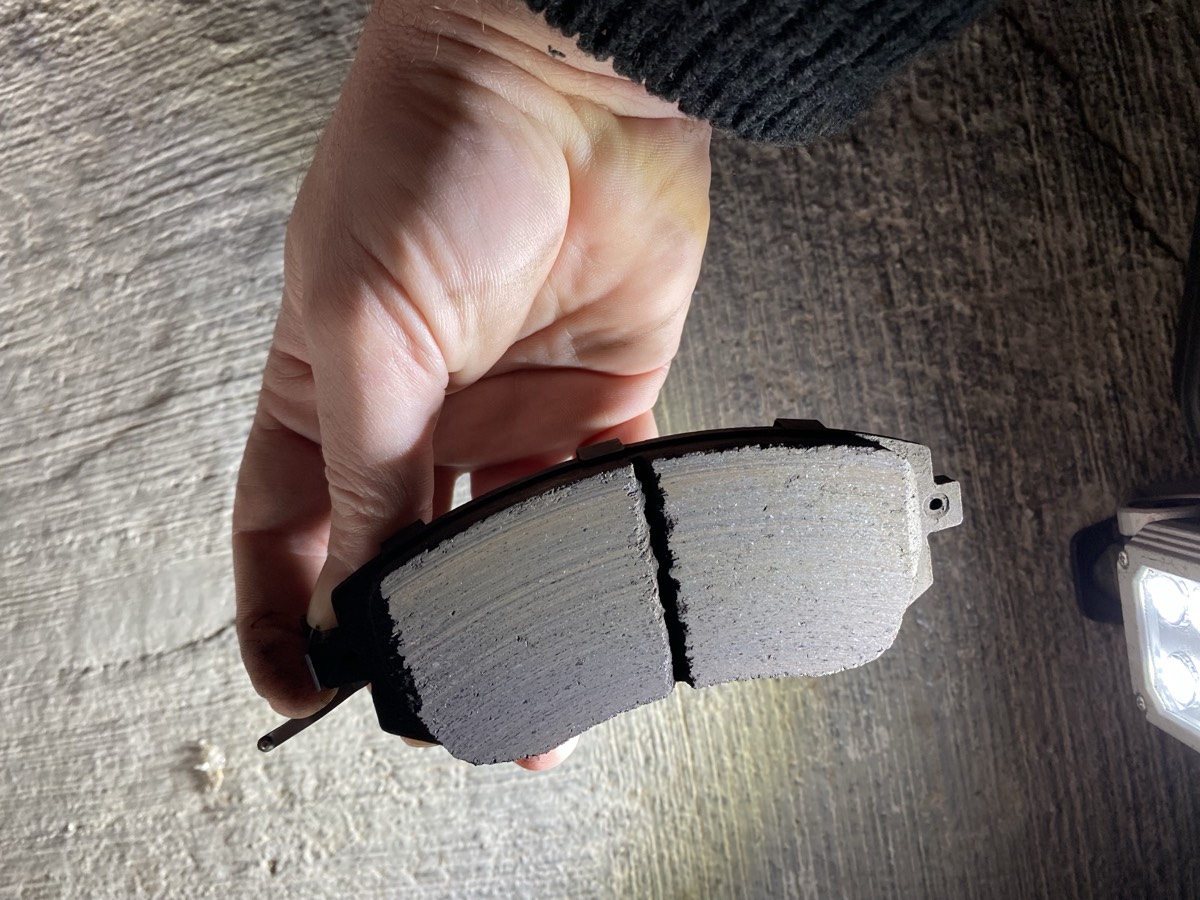
Performance was solid — 1g of deceleration on a stock car with street tyres. But the pedal feel was inconsistent, and after four track days at Serres Racing Circuit, I pulled the front-left wheel off to see what was left. The answer: not much.
The Halfway Point
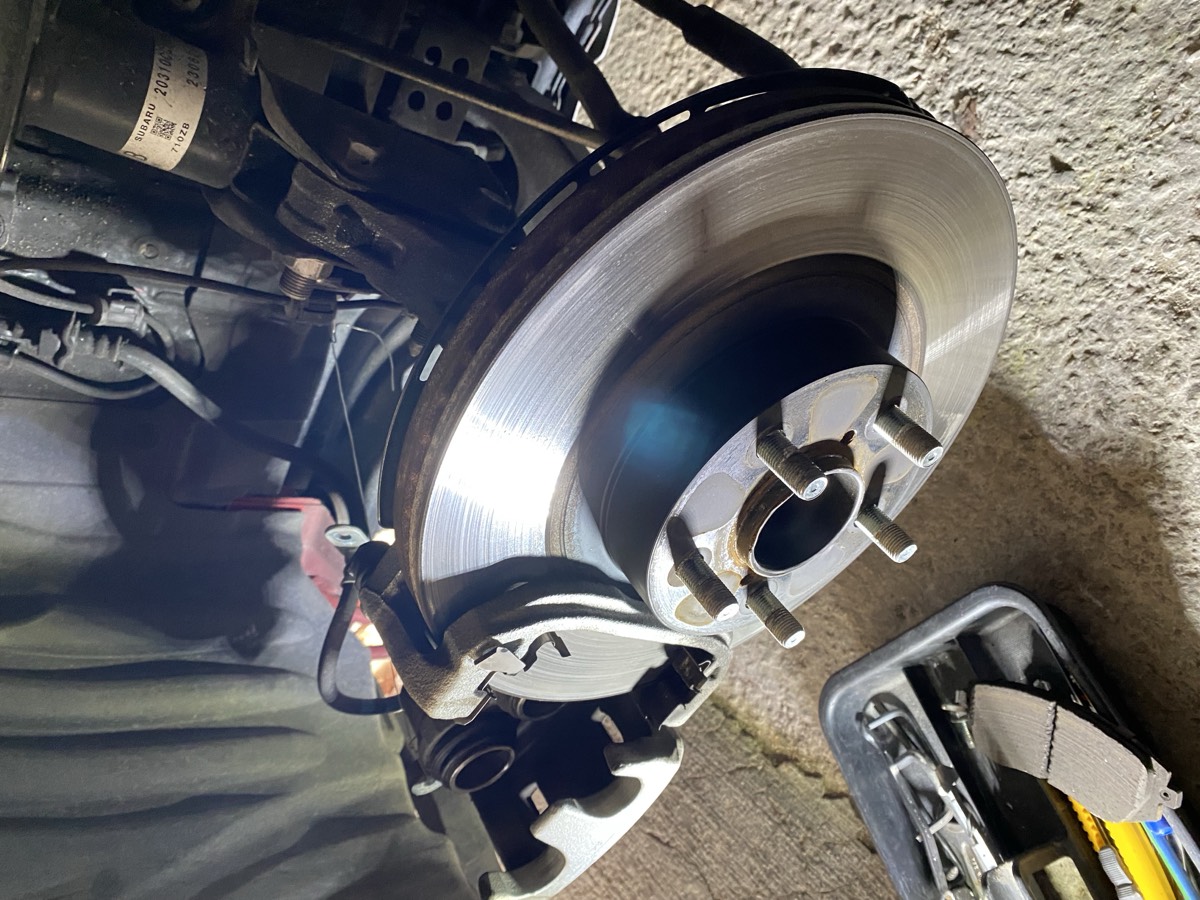
In February 2025, after two track days, I did a check. The EBC YellowStuff pads still had around 60–70% of their friction material. The OEM rotors showed some light scoring but nothing dramatic. Everything was serviceable. I buttoned it back up and kept driving.
Four Track Days Later
March 2026. Two more track days at Serres since that check. I already knew what I'd find before pulling the wheel off — the pedal had been telling me for a while.
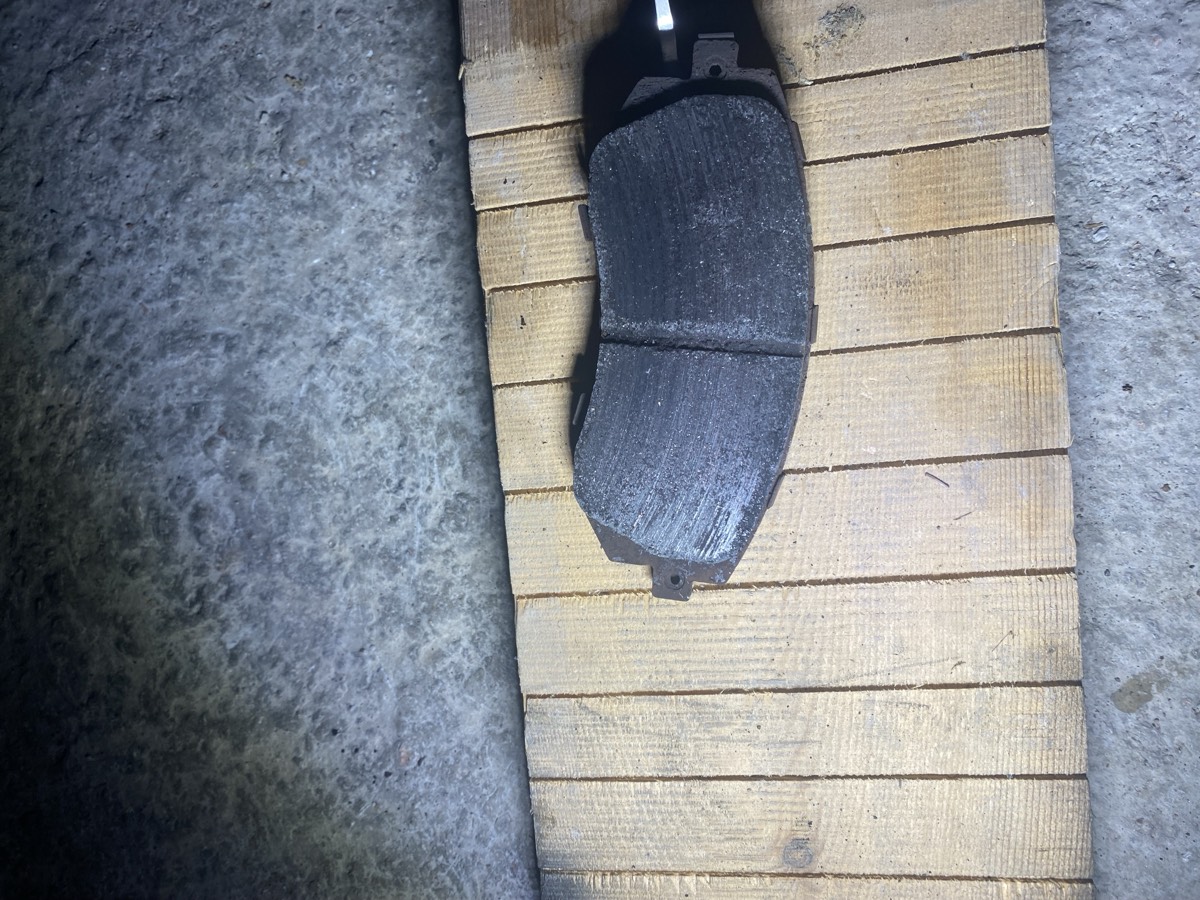
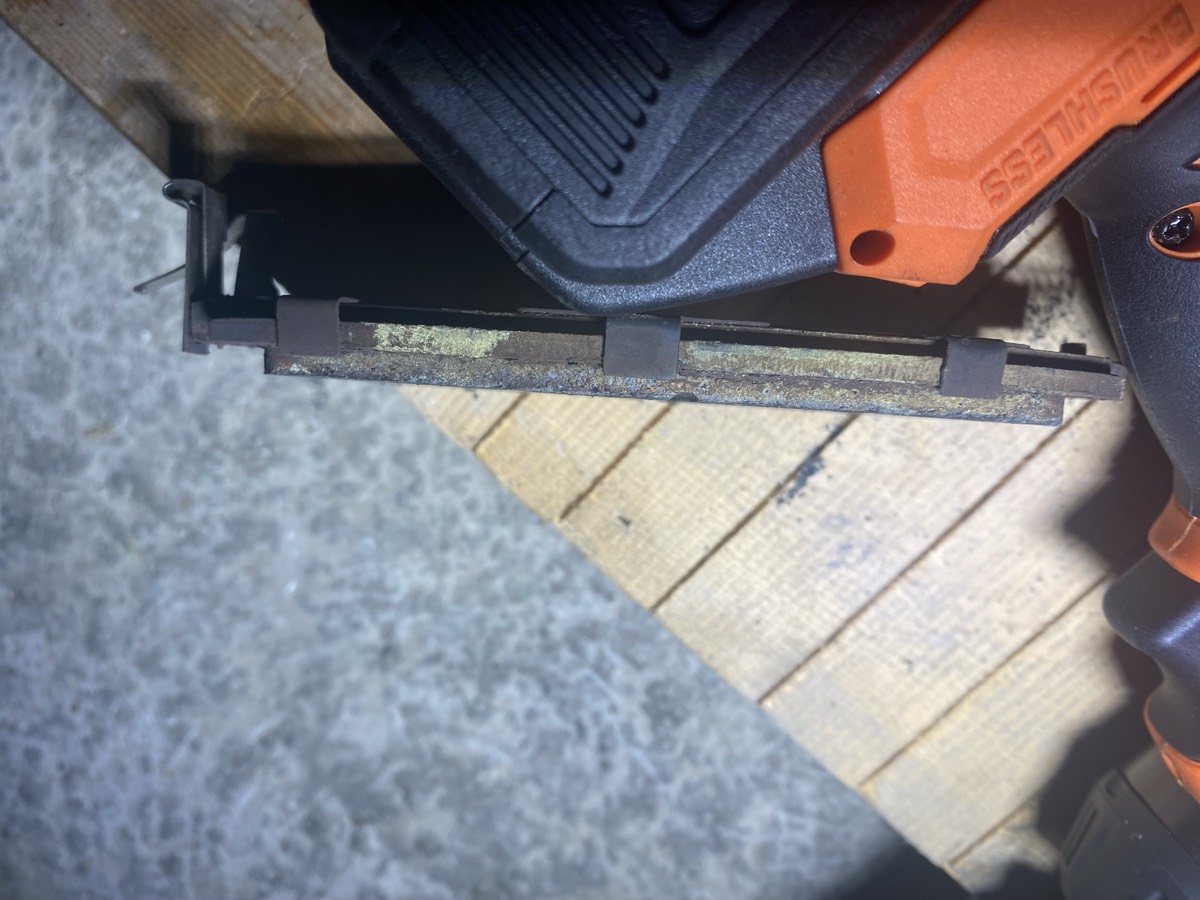
The pads were done. Maybe 2–3mm of friction material left — approaching the backing plate. No glazing, no uneven wear. The caliper had been sliding properly throughout their life. They simply did their job and wore out doing it.
But the rotors told a harder story.
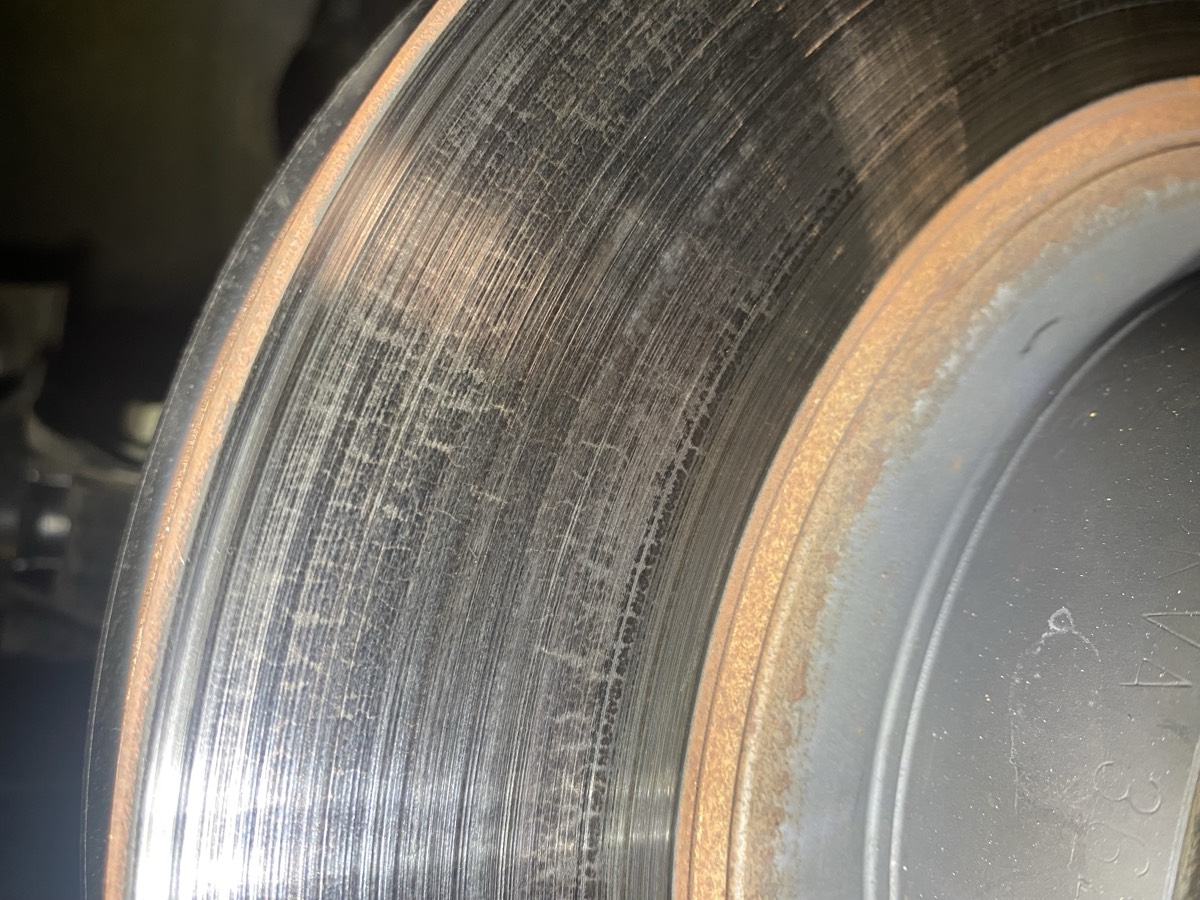
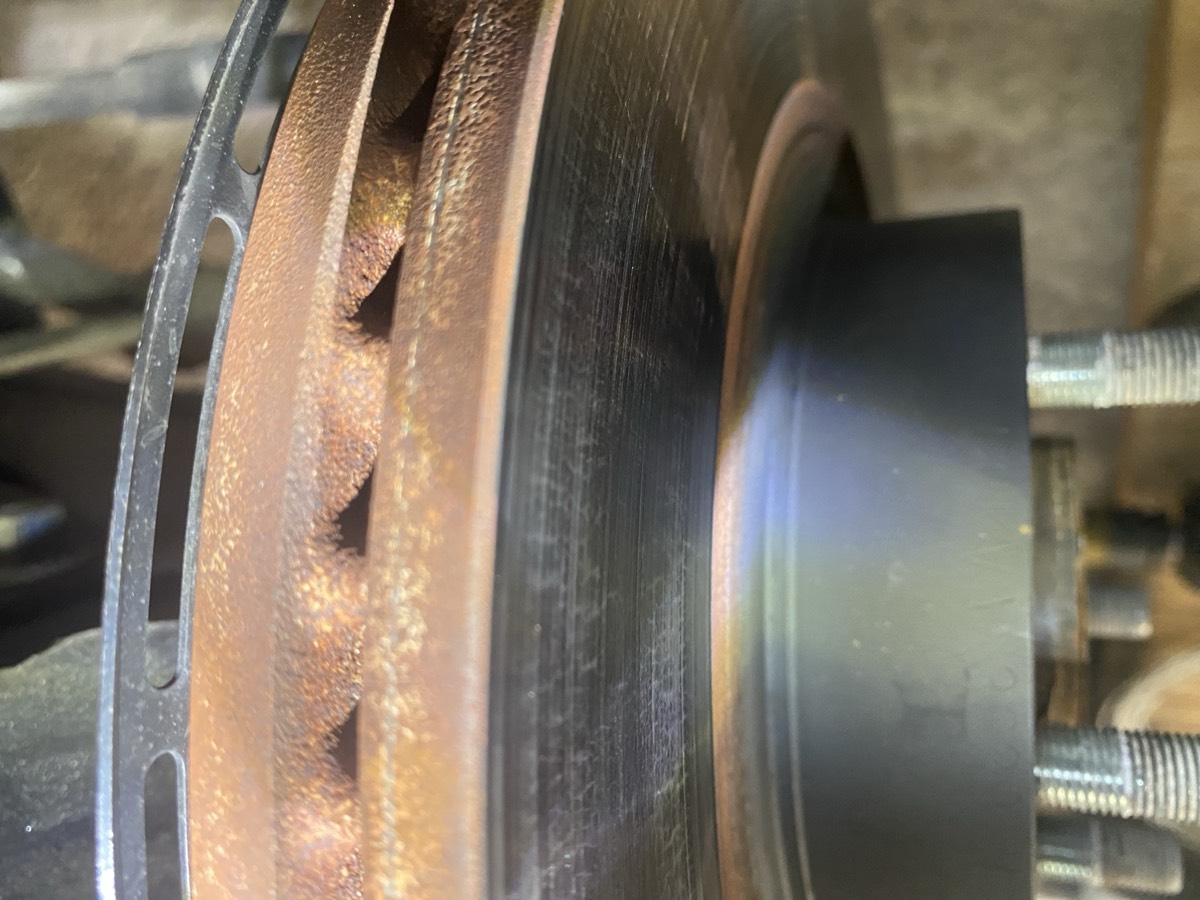
Pronounced scoring, dark hot-spot patches from repeated high-heat cycles, and a noticeable lip at the outer edge. OEM rotors aren't built for sustained track abuse, and four sessions with aggressive YellowStuff pads pushed them past their useful life. Resurfacing wasn't an option — the scoring was too deep and the risk of warping or cracking under track loads wasn't worth it.
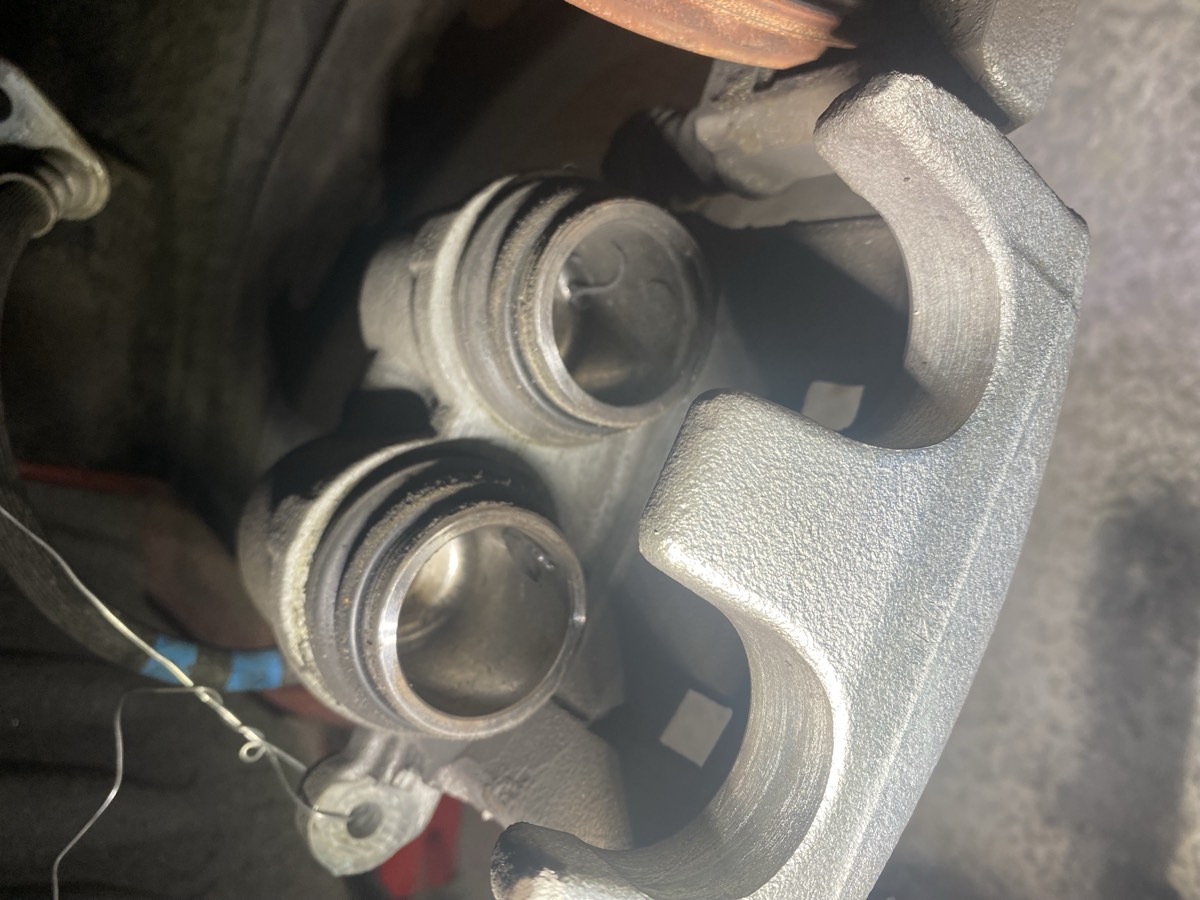
The good news: the dual-piston calipers came through four track days without a scratch. Clean bores, intact dust boots, no leaks. They'll carry over to the new setup.
The Upgrade
The goal was simple: more track days per set, consistent pedal feel, and no mental overhead. The YellowStuffs had an inconsistent bite — fine on the first braking zone, different on the third. I wanted brakes I could trust to feel identical on lap one and lap three.
Rotors — DBA 4000 Series T3
The DBA 4000 T3 is the sweet spot for track/street dual use. High carbon alloyed iron that handles heat cycling far better than OEM, Kangaroo Paw ventilation for 20% better cooling, and the T3 bi-slotted design for pad degassing. No drills — those crack under repeated thermal stress. The 5000 series with aluminum hats was 2.5x the price for diminishing returns at four track days per year.
DBA 4000 T3 Rotors
Pads — Ferodo DS1.11
This is where it gets interesting. The DS1.11 is an endurance race compound — the same material used in 24-hour races. It's based on siloxane chemistry instead of carbon. Unlike carbon-based compounds (YellowStuff, Bluestuff), siloxane chains don't decompose at high temperatures. The pad just keeps working.
The defining trait is the flat torque curve. As temperatures climb through a session, the friction coefficient barely moves. What you feel at the first braking zone is what you feel at the last. Low pad compression means a short, firm, consistent pedal. It's also significantly gentler on rotors than the YellowStuffs were — the combination of harder DBA iron and a less aggressive pad compound should extend rotor life considerably.
Trade-offs? The initial cold bite is adequate rather than strong — enough to stop safely on a cold morning, but it won't grab like a street pad. Noise and dust are higher. For my use case, neither matters.
Ferodo DS1.11 Pads
What Comes Next
The old setup gave me four track days before everything needed replacing. The combination of harder DBA rotors and an endurance-grade pad compound that doesn't eat discs should shift that number meaningfully. How far? That's the next chapter.
The fluid stays — Motul RBF600 handles the heat fine. The calipers get cleaned, re-greased, and carry on. And the stock rear rotors go on a shelf for street-only periods when I want to save the DBA set for track duty.
Next track day at Serres, no mental overhead for the brakes anymore!